
What Is the Best Solar Oven?
A solar oven uses sunlight to heat and cook food without electricity, propane, charcoal, or firewood. That makes solar cooking particularly useful for camping, outdoor cooking, emergency preparedness, and situations where conventional fuel or electricity is unavailable.
But there is no single solar oven that is best for everyone. Some models are designed to be lightweight and portable, while others prioritize higher cooking temperatures or larger cooking capacity. The right choice depends on how you plan to use it, how much food you need to cook, and how much direct sunlight is available where you live.
In this guide, we look at what makes a good solar oven and what to consider before choosing one.
Click here for: Are Solar Panels the Best Thing for the Environment?
What Is a Solar Oven?
A solar oven, sometimes called a solar cooker, uses sunlight as its source of heat. Reflective surfaces direct sunlight toward a cooking chamber or cooking container, where the energy is converted into heat.
Different solar ovens use different designs. Box-style solar ovens generally focus on retaining heat inside an insulated chamber, while parabolic cookers concentrate sunlight onto a smaller area to produce higher temperatures.
Because solar ovens depend on sunlight, their performance can vary considerably depending on the weather, time of day, season, location, and orientation of the cooker.
What Makes the Best Solar Oven?
Before choosing a solar oven, consider several important factors.
Cooking Temperature
Different types of solar cookers are capable of reaching different temperatures. If you mainly want to warm food or slowly cook meals, a basic solar oven may be sufficient.
If you want to boil water, sear food, or cook at higher temperatures, a concentrating design such as a parabolic cooker may be more appropriate.
Do not choose a model based only on its advertised maximum temperature. Real-world performance depends heavily on direct sunlight and correct positioning.
Cooking Capacity
Think about how many people you normally need to cook for.
A compact solar oven can be convenient for one or two people and is easier to transport. Larger cookers may be more suitable for families or group camping but can require more storage space.
Portability
If you plan to take your solar oven camping or traveling, weight and storage size become important.
Foldable designs can be especially convenient because they can be packed away when not being used. Larger rigid cookers may offer more cooking capacity but can be less convenient to transport.
Ease of Setup
A good solar oven should not be unnecessarily complicated to position and use.
Some designs require you to periodically adjust their angle as the sun moves across the sky. Others are easier to set up but may take longer to heat food.
Consider how much effort you are willing to put into positioning the cooker during a meal.
Durability
Outdoor cooking equipment can be exposed to sunlight, heat, wind, dust, and moisture.
Look for construction materials that are appropriate for outdoor use and check whether replacement parts or covers are available if the manufacturer offers them.
Insulation and Heat Retention
For enclosed solar ovens, insulation and the quality of the cooking chamber can have a major effect on performance.
A cooker that captures sunlight but loses heat quickly may not perform as well as one designed to retain heat efficiently.
Accessories
Some solar ovens are sold as standalone cookers, while others include cookware, carrying bags, stands, thermometers, or other accessories.
Accessories can add convenience, but they should not be the main reason to choose a solar oven. Focus first on the cooker’s design and intended use.
Solar Oven vs. Parabolic Solar Cooker
Not every solar cooker works in exactly the same way.
A traditional box-style solar oven generally captures and retains heat inside an enclosed cooking area. These cookers can be useful for slow cooking, baking, and reheating food.
Parabolic solar cookers use curved reflective surfaces to concentrate sunlight onto a cooking area. They can produce considerably higher temperatures under strong direct sunlight, making them more suitable for cooking techniques that require more heat.
The trade-off is that concentrating cookers generally require more careful positioning and direct sunlight.
Solar Ovens for Camping
A portable solar oven can be useful for camping because it eliminates the need to carry fuel specifically for cooking.
For camping, portability is usually more important than having the absolute highest possible temperature. A foldable cooker that fits easily into your equipment may be more useful than a large high-output model that is difficult to transport.
When choosing a camping solar oven, consider:
- Weight
- Folded size
- Cooking capacity
- Setup time
- Included cookware
- Wind resistance
- Ease of repositioning
- Storage requirements
Solar Ovens for Emergency Preparedness
Solar ovens can also be useful as part of an emergency cooking setup.
If electricity or conventional fuel becomes unavailable, sunlight can provide an alternative source of cooking heat during suitable weather.
However, a solar oven should not necessarily be your only emergency cooking method. Solar cooking depends on sunlight, so cloudy weather, storms, nighttime, and seasonal conditions can limit its usefulness.
Having multiple cooking options can provide more flexibility during an extended power outage.
How Long Does a Solar Oven Take to Cook Food?
There is no universal cooking time for a solar oven.
Cooking speed depends on the type of cooker, the amount and type of food, outdoor temperature, cloud cover, time of day, and the amount of direct sunlight available.
A solar oven may also need time to preheat before food is placed inside.
For this reason, solar cooking is often better suited to meals where precise cooking times are less important. It can require more patience than conventional electric or gas cooking.
Does a Solar Oven Work on a Cloudy Day?
Solar ovens work best in strong, direct sunlight.
Some enclosed solar ovens can continue to produce useful heat when conditions are less than ideal, but cloudy skies generally reduce the amount of solar energy reaching the cooker.
Heavy cloud cover can make solar cooking impractical.
If you live somewhere with frequent cloud cover, consider how often you will realistically have suitable weather before investing in a solar cooker.
How to Position a Solar Oven
Positioning is one of the most important parts of solar cooking.
The reflective surface needs to receive as much direct sunlight as possible. Depending on the design, you may need to adjust the cooker periodically as the sun moves.
Avoid placing the cooker where buildings, trees, walls, or other objects will create shadows.
Always follow the manufacturer’s instructions when positioning and operating a concentrating solar cooker.
Solar Oven Safety
Solar ovens can reach temperatures high enough to cause burns, even though they do not use conventional fuel.
Use heat-resistant gloves or appropriate cooking tools when handling hot cookware. Keep children away from concentrated sunlight and hot surfaces.
Parabolic solar cookers require particular care because concentrated sunlight can be extremely intense. Never look directly at concentrated reflected sunlight, and keep flammable materials away from the concentrated beam.
Always follow the safety instructions provided with the specific cooker you purchase.
Solar Oven Options to Consider
The following products represent different types of solar cooking equipment. They should be evaluated based on their specifications, intended use, size, portability, and current customer feedback rather than assuming one model is universally the best.
1. Solar-Powered Outdoor Cooking Oven

Durability and ease of use set it apart. Lightweight yet sturdy construction allows for portability while maintaining heat levels needed for baking, roasting, or slow cooking. It’s a practical choice for those seeking a sustainable, low-maintenance cooking method.
2. Portable Solar Oven and Cooking Kit
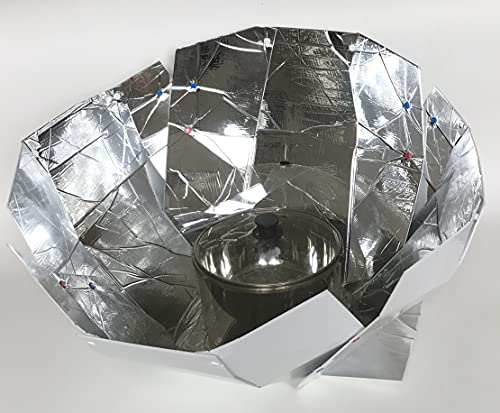
This setup excels in consistent performance, even in partial sunlight. The combination of solar power and cast iron retains heat effectively, ensuring reliable results. For those prioritizing adaptability and ease of use, it’s a top choice in solar cooking.
3. Foldable Solar Oven for Camping

For those seeking the best solar oven, this model delivers consistent performance. It eliminates the need for propane or firewood, reducing weight and hassle. Durable construction and simple operation make it a practical choice for off-grid cooking.
4. High-Efficiency Solar Oven for Camping

For camping or off-grid use, this model excels with its portability and durability. The reflective surface maximizes sunlight capture, reducing cooking time while maintaining energy efficiency, setting it apart as a top-tier solar cooking solution.
5. Portable Solar Cooking Oven

Its reflective panels maximize heat capture, ensuring consistent cooking even in partial sunlight. Durable materials and simple assembly make it a reliable choice for off-grid cooking. Performance and portability set it apart.
6. Portable Parabolic Solar Oven

Beyond cooking, it serves as a hands-on educational tool for solar energy principles, demonstrating high-temperature concentration. The durable build withstands outdoor conditions while maintaining precision, making it a reliable choice for those prioritizing power and versatility in a solar oven.
7. Portable Solar Cooking Oven

For outdoor cooking, lightweight construction matters, and this one keeps weight down without sacrificing performance. It’s straightforward to set up and use, making it a practical choice for anyone needing a no-fuss solar cooker.
8. Portable Solar Oven for Outdoor Cooking

For those seeking the best solar oven, this model balances power and convenience. High temperatures handle everything from baking to roasting, and the durable build withstands outdoor use. Efficiency and ease make it a top choice for off-grid cooking.
9. Large Outdoor Solar Cooking Oven

Durability and portability balance well in this model, with sturdy construction that withstands outdoor conditions. The reflective material maximizes energy capture, while the adjustable stand allows precise angle control. It’s a practical choice for those needing reliable, high-output solar cooking or educational demonstrations.
How to Choose the Right Solar Oven
The best solar oven depends largely on your intended use.
| Your priority | What to look for |
|---|---|
| Camping | Lightweight and foldable design |
| Emergency cooking | Simple setup and reliable heat retention |
| High-temperature cooking | Parabolic or concentrating design |
| Family meals | Larger cooking capacity |
| Occasional use | Compact and easy-to-store model |
| Off-grid cooking | Durable construction and suitable cookware |
| Maximum portability | Lightweight folding cooker |
Instead of focusing only on the highest advertised temperature, think about how you will actually use the cooker.
A smaller portable oven may be the better choice for someone who travels frequently, while a larger parabolic cooker may make more sense for someone who primarily cooks outdoors at home.
Are Solar Ovens Worth It?
Solar ovens can be worth considering if you regularly have strong sunlight and enjoy outdoor or off-grid cooking.
They can reduce the need for conventional cooking fuels and allow you to prepare food using a renewable source of energy. They can also be useful for camping and emergency preparedness.
However, solar cooking has limitations. It depends on weather and sunlight, cooking can take longer than conventional methods, and some cookers require frequent repositioning.
For most people, a solar oven is best viewed as an additional cooking option rather than a complete replacement for a conventional kitchen.
Frequently Asked Questions
What is the best solar oven?
The best solar oven depends on how you plan to use it. Portable enclosed ovens are convenient for camping and general cooking, while parabolic cookers are better suited to higher-temperature cooking in strong direct sunlight.
Can you cook anything in a solar oven?
Many foods can be prepared in a solar oven, including baked, roasted, and slow-cooked meals. However, cooking times and results can differ from conventional ovens, and some cooking methods require higher temperatures than certain solar ovens can provide.
How hot does a solar oven get?
The maximum temperature varies significantly by design. Enclosed solar ovens and parabolic cookers have different operating characteristics, and actual temperatures depend on sunlight, weather, positioning, and the specific model.
Do solar ovens work in winter?
Yes, solar ovens can work during winter if sufficient direct sunlight is available. Cold outdoor temperatures can affect cooking performance, but strong sunlight can still provide useful heat.
Do solar ovens work at night?
No. Solar ovens require sunlight to generate heat, so they cannot normally cook food at night without another source of heat.
Are solar ovens safe?
Solar ovens can be safe when used correctly, but they can reach high temperatures. Parabolic cookers require particular caution because they concentrate sunlight. Always follow the manufacturer’s safety instructions.
Are solar ovens environmentally friendly?
Solar ovens can reduce the need for electricity, propane, charcoal, or firewood during cooking. Their environmental benefit depends on how they are manufactured and used, but using sunlight as the cooking energy source can reduce reliance on conventional fuels.
Final Thoughts
The best solar oven is not necessarily the one with the highest advertised temperature or the largest reflector. It is the one that matches your cooking needs, available sunlight, budget, and preferred level of portability.
For camping and travel, a lightweight foldable model may be the most practical choice. For higher-temperature cooking, a parabolic cooker may be more appropriate. For everyday outdoor use, a larger cooker can provide more capacity but will generally require more storage space.
Before buying, compare the cooking capacity, design, portability, materials, included accessories, safety requirements, and manufacturer’s specifications. Most importantly, consider whether you regularly have enough direct sunlight to make solar cooking practical for your situation.